

What is due on 31 October 2026
| Quarter | Period | Due date |
|---|---|---|
| Q1 | April–June | 31 July |
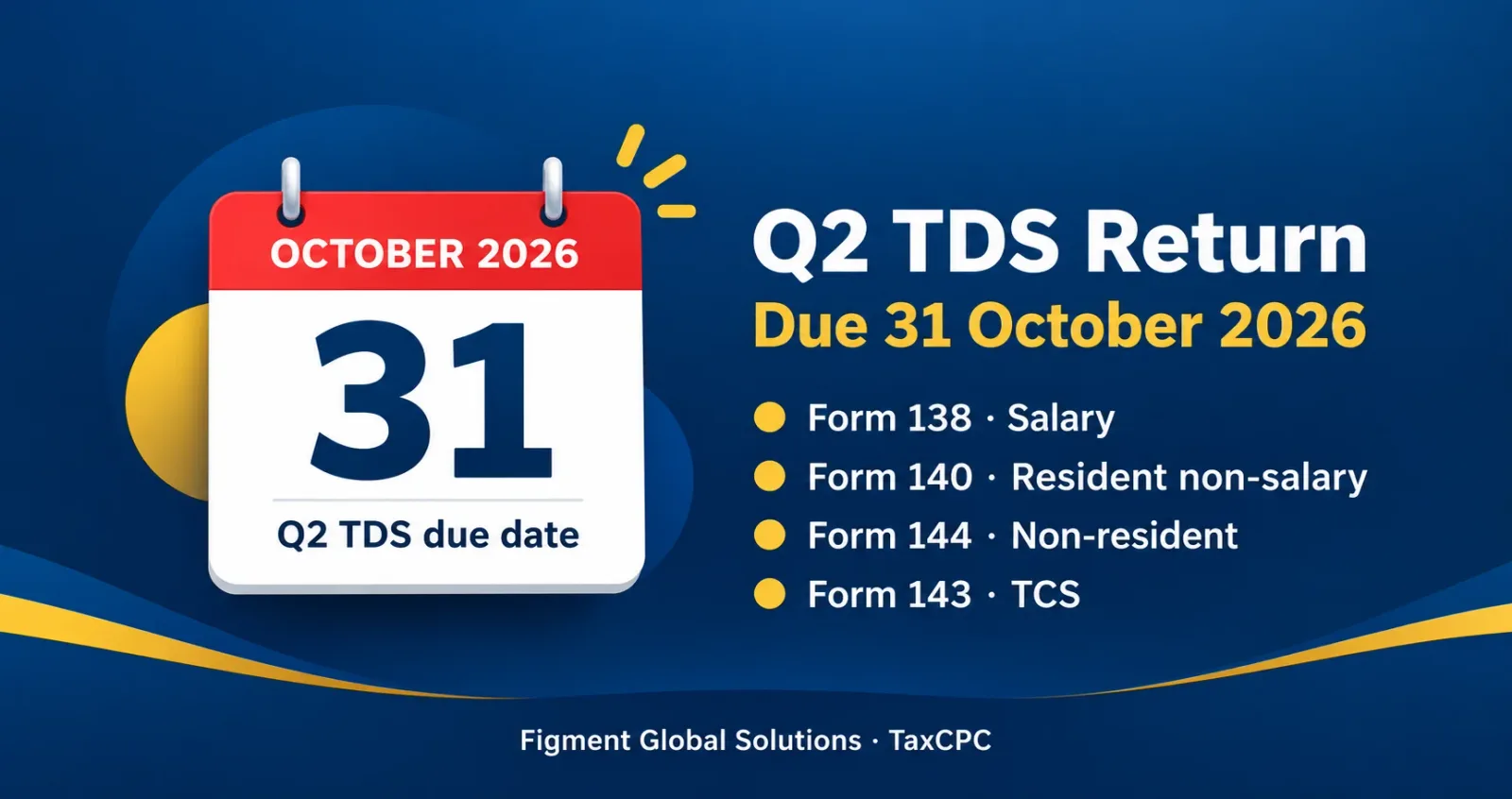
| Q2 | July–September | 31 October 2026 |
| Q3 | October–December | 31 January |
| Q4 | January–March | 31 May |
Forms under the Income-tax Act, 2025
| Statement | Old form (Income-tax Act, 1961) | New form (Income-tax Act, 2025) |
|---|---|---|
| Salary TDS | 24Q | Form 138 |
| Non-salary payments to residents | 26Q | Form 140 |
| Payments to non-residents | 27Q | Form 144 |
| TCS (tax collected at source) | 27EQ | Form 143 |
Pre-filing checklist for Q2
| # | Check | Why it matters |
|---|---|---|
| 1 | Challan details (BSR code, date, serial number, amount) match the deduction rows | The most common cause of default notices and 26AS/AIS mismatches |
| 2 | PAN of every deductee is valid and active | Invalid or missing PAN leads to higher deduction rates and short credit to the deductee |
| 3 | Correct section/nature of payment for each row | Wrong code means wrong rate, and a rejected or defective statement |
| 4 | Transactions before and after 1 April 2026 are mapped to the right Act | Events on or before 31 March 2026 fall under the 1961 Act, later events under the 2025 Act |
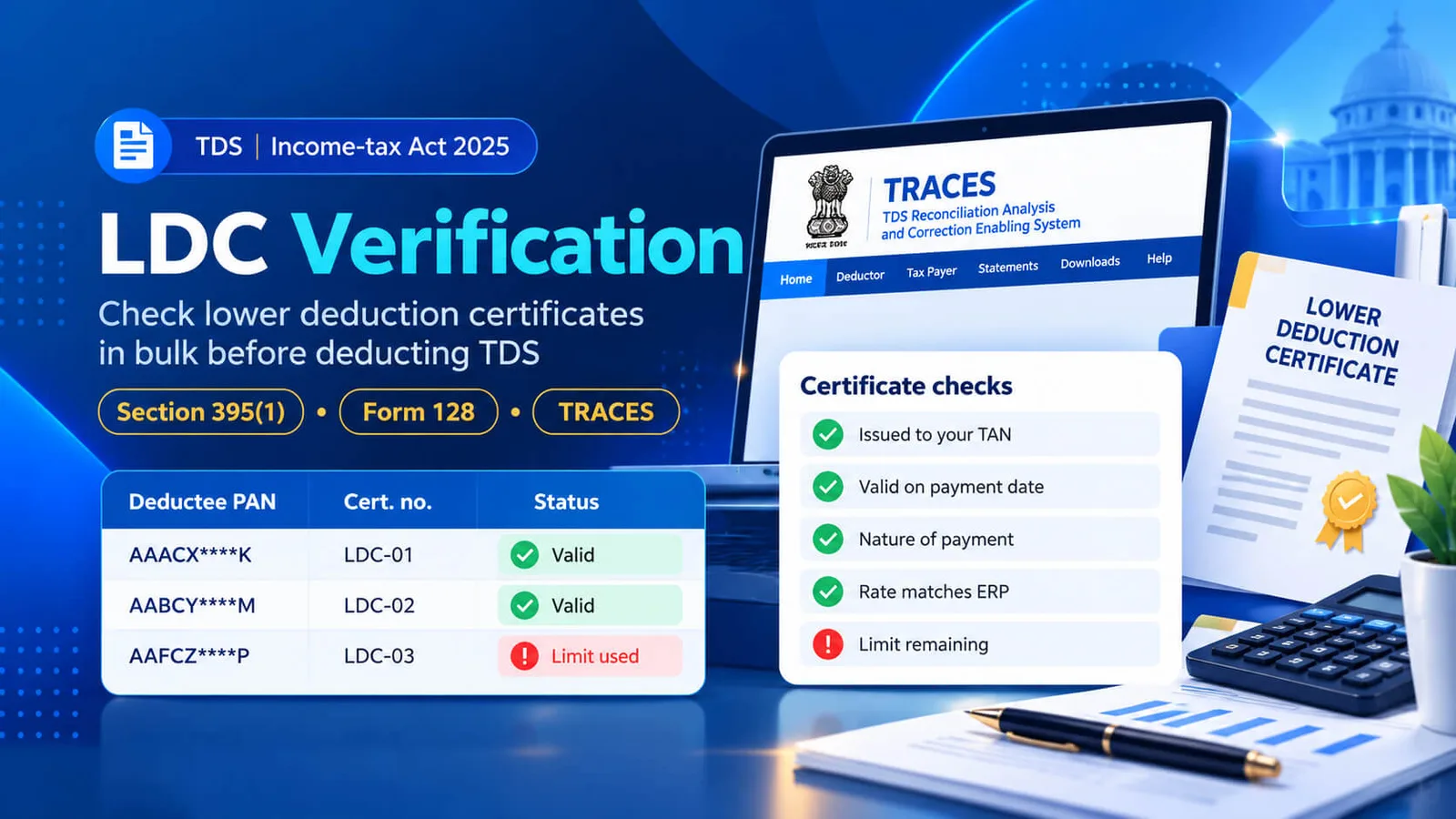
| 5 | Lower/nil deduction certificates are applied only within validity and amount limits | Over-reliance on expired certificates creates short-deduction demand |
| 6 | Late deposits carry interest in the challan | Unpaid interest shows up as a default |
| 7 | Salary statement: employee-wise regime, deductions and perquisites reconcile with payroll | Mismatch with payroll leads to Form 16 corrections later |
| 8 | Statement passes FVU validation | Upload without clean validation will be rejected |
| 9 | Previous quarter's statements are processed and accepted | Unprocessed earlier statements create cascading defaults |
| 10 | Form 26AS/AIS check for unmatched challans | Catch unmatched credits while a correction is still easy |
Late filing, short deduction and rejection: what it costs
Late filing fee under section 234E: ₹200 per day until the statement is filed, limited to the TDS amount for the statement. Penalty under section 271H: ₹10,000 to ₹1,00,000 for failure to file on time, or for incorrect particulars, subject to the proviso for late filing with tax and fee paid. Interest under section 201(1A): 1% per month for failure to deduct, 1.5% per month for deduction without deposit. Disallowance of a part of the related expenditure under section 40(a)(ia) for non-deduction or late deposit (30% of the expense).
Tax audit and ITR deadline: related relief this month
TDS certificates after Q2
How TaxCPC handles the quarterly TDS return
Preparing and validating return statements for each form type, including corrections. Checking deductee PAN details and challan mapping before the file is created. Reconciling deductions with Form 26AS, so unmatched challans are visible before the due date. Handling multiple TANs and branches from one place, with review before filing.
Frequently Asked Questions
31 October 2026, for deductions made from 1 July to 30 September 2026.
Form 140 replaces Form 26Q and covers quarterly TDS statements for non-salary payments made to residents. This mapping is confirmed by the Income-tax Rules, 2026 and the Income Tax Department’s official guidance.
No. CBDT Circular 07/2026 dated 28 September 2026 extends the tax audit report and ITR dates for audit cases, not the quarterly TDS statement.
Late filing attracts a fee of ₹200 per day, capped at the amount of TDS, and may also attract a penalty of ₹10,000 to ₹1,00,000. Interest may apply separately for late deduction or deposit of TDS. Under the Income-tax Act, 1961, these consequences are covered by Sections 234E, 271H and 201(1A), respectively. Under the Income-tax Act, 2025, the corresponding provisions are Sections 427, 461 and 398(3), respectively.
Yes. A rejected or defective statement must be corrected and resubmitted. Run FVU validation and compare with Form 26AS to avoid it.