

Quick answer
What exactly changed in Rule 225
| Provision | Change |
|---|---|
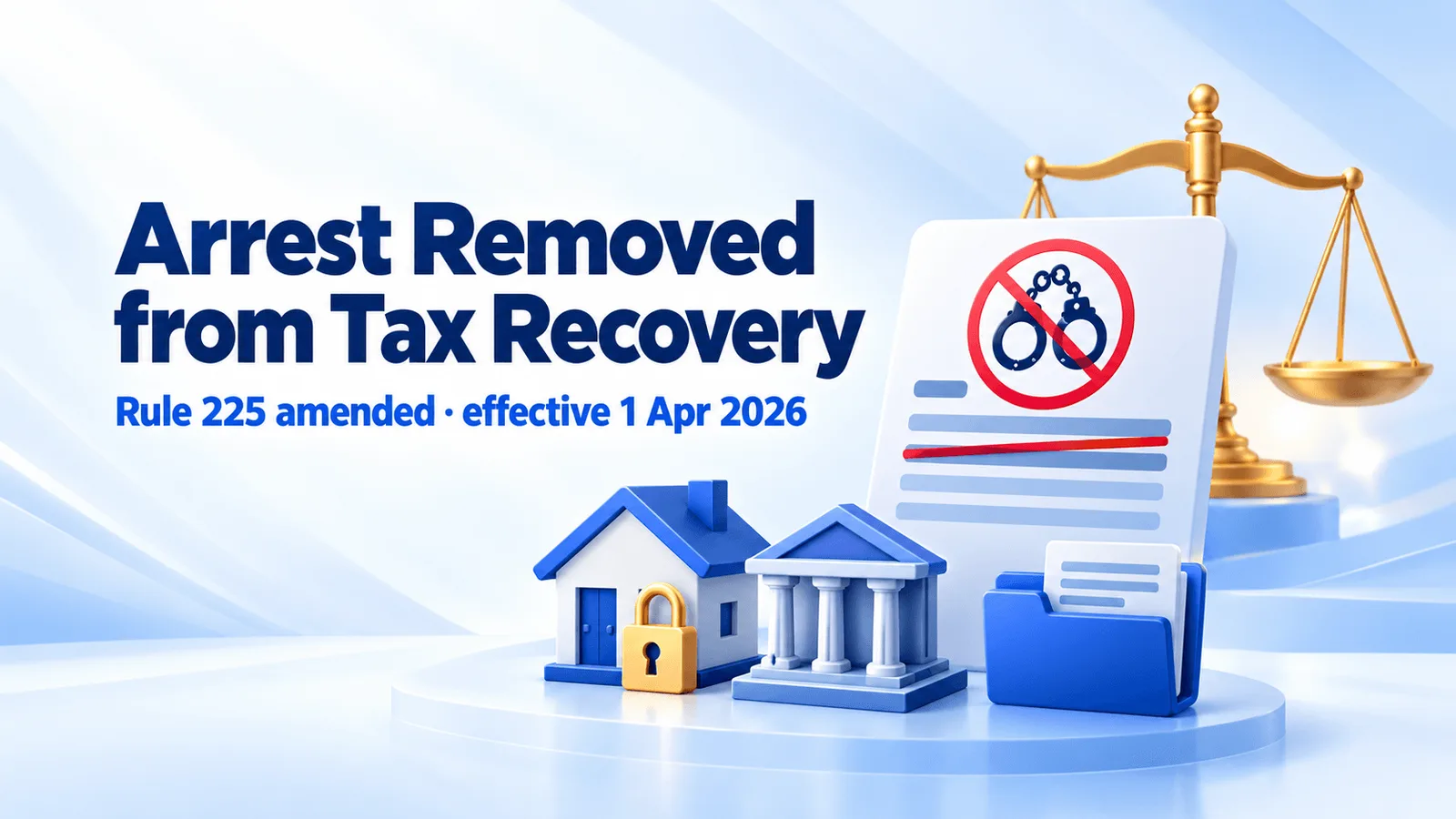
| Rule 225(4), clause (c) | Omitted. This clause listed arrest and detention in prison as a mode of recovery |
| Rule 225(75) to (83) and (91) | Omitted. These sub-rules set out the procedure for arrest and detention |
| Rule 225(19) | The words "or to arrest" replaced with "of" |
| Rule 225(87) (police assistance) | The words "(except arrest and detention)" removed |
Recovery modes that remain
Attachment and sale of the defaulter's movable property Attachment and sale of immovable property Appointment of a receiver to manage the defaulter's property Other recovery measures under the Act, such as recovery from persons who owe money to the defaulter (for example, bank attachment)
Important
What it means for taxpayers with pending demands
A demand that is not paid or stayed can still be recovered by attaching bank accounts, receivables and property. Check every outstanding demand on the e-filing portal under Pending Actions, and file a response if you disagree with it. Where an appeal is pending, apply for a stay of demand, usually on payment of a part of the disputed amount, to avoid coercive recovery. Keep your contact details on the portal current so recovery notices reach you in time.
Other changes in the same notification
Frequently Asked Questions
Arrest and detention in prison are no longer modes of recovery under Rule 225 of the Income-tax Rules, 2026. Prosecution provisions under the Act are separate and unaffected.
The Rule 225 amendments are deemed to have come into force on 1 April 2026.
The Income-tax (Fourth Amendment) Rules, 2026, Notification No. 120/2026, G.S.R. 822(E) dated 17 September 2026.
Attachment and sale of movable and immovable property, appointment of a receiver, and other recovery measures under the Act.
No. The amendment only removes arrest and detention as a recovery mode. Interest for late payment, penalties for default and the other recovery actions, such as attachment of bank accounts and property, continue to apply to unpaid demands.