
Figment Global Solutions
TDS

TDS Returns Can Now Be Filed Online on TRACES from Q2 of Tax Year 2026-27

TRACES now lets deductors file TDS/TCS returns (Forms 138, 140, 143, 144) online from Q2 of Tax Year 2026-27, without the e-filing portal or an FVU file.

Mukul ThukralMukul ThukralSquad Lead 5 min read
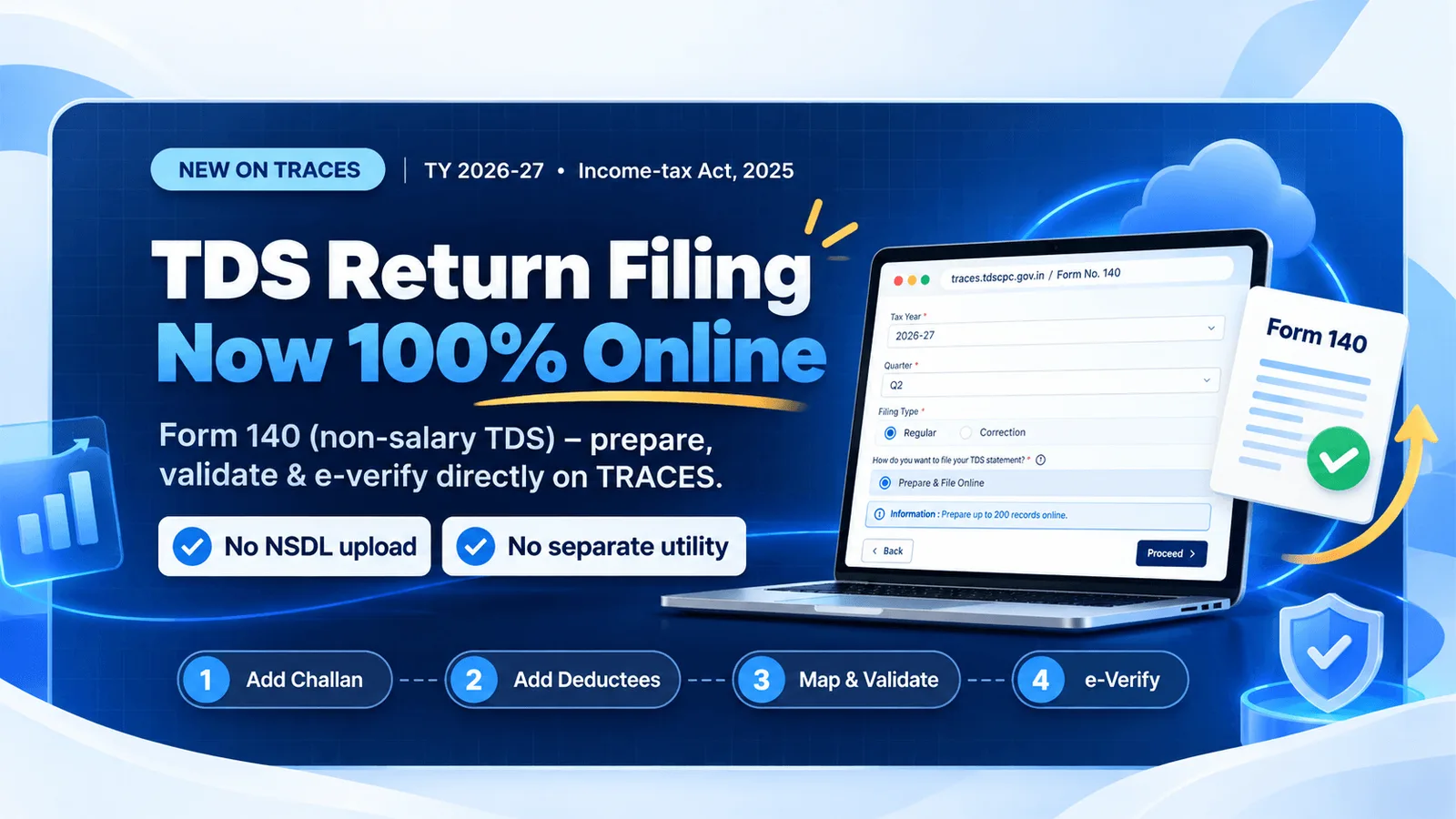
TDS return online filing on TRACES for Forms 138, 140, 143 and 144 from Q2 Tax Year 2026-27

TDS return filing has changed from Q2 of Tax Year 2026-27. Deductors can now prepare and file quarterly TDS/TCS returns directly online on the TRACES portal. Earlier, a TDS return had to be prepared in a utility, validated through the File Validation Utility (FVU), uploaded on the income tax e-filing portal, and then transferred to TRACES for processing. The new "Prepare & File Online" facility removes these steps: the return is prepared, validated and e-verified on TRACES itself.

Which TDS returns can be filed online on TRACES

Form under Income-tax Act, 2025Earlier formUsed for
Form No. 138 Form 24Q TDS on salary
Form No. 140 Form 26Q TDS on payments other than salary to residents
Form No. 144 Form 27Q TDS on payments to non-residents
Form No. 143 Form 27EQ TCS (tax collected at source)

According to the note shown on TRACES, these statements can be prepared and submitted online from Tax Year 2026-27. Users have already filed Form No. 140 for Q2 (July to September 2026) through this route.

Old process vs new online process

StepOld processNew TRACES online filing
Preparation Return Preparation Utility (RPU) or third-party software Online form on TRACES
Validation File Validation Utility (FVU) Validation on TRACES before submission
Submission Upload on the e-filing portal or at a TIN facilitation centre Submitted on TRACES itself
Challans Typed in from challan receipts Unconsumed challans imported from TRACES; can also be added manually
Verification DSC or EVC on the e-filing portal Aadhaar OTP or DSC of the authorised person on TRACES
Processing After the statement is transferred from the e-filing portal to TRACES Directly on TRACES

How to file a TDS return online on TRACES: step by step

Step 1: Open the filing section and select Form 140
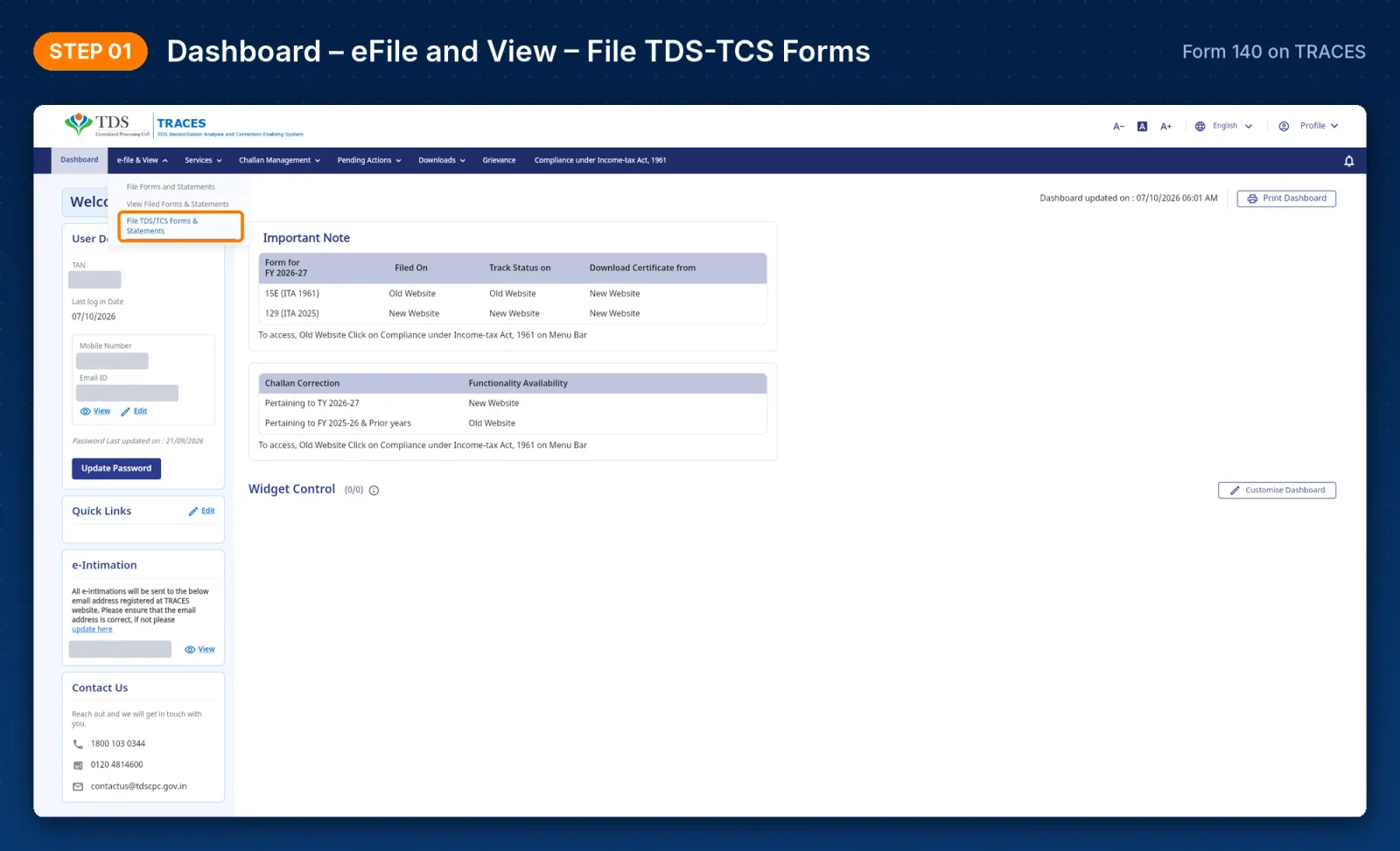
1. Log in to TRACES and go to e-file & View → File TDS/TCS Forms & Statements.

TRACES Form 140 – e-file & View menu with File TDS/TCS Forms & Statements option

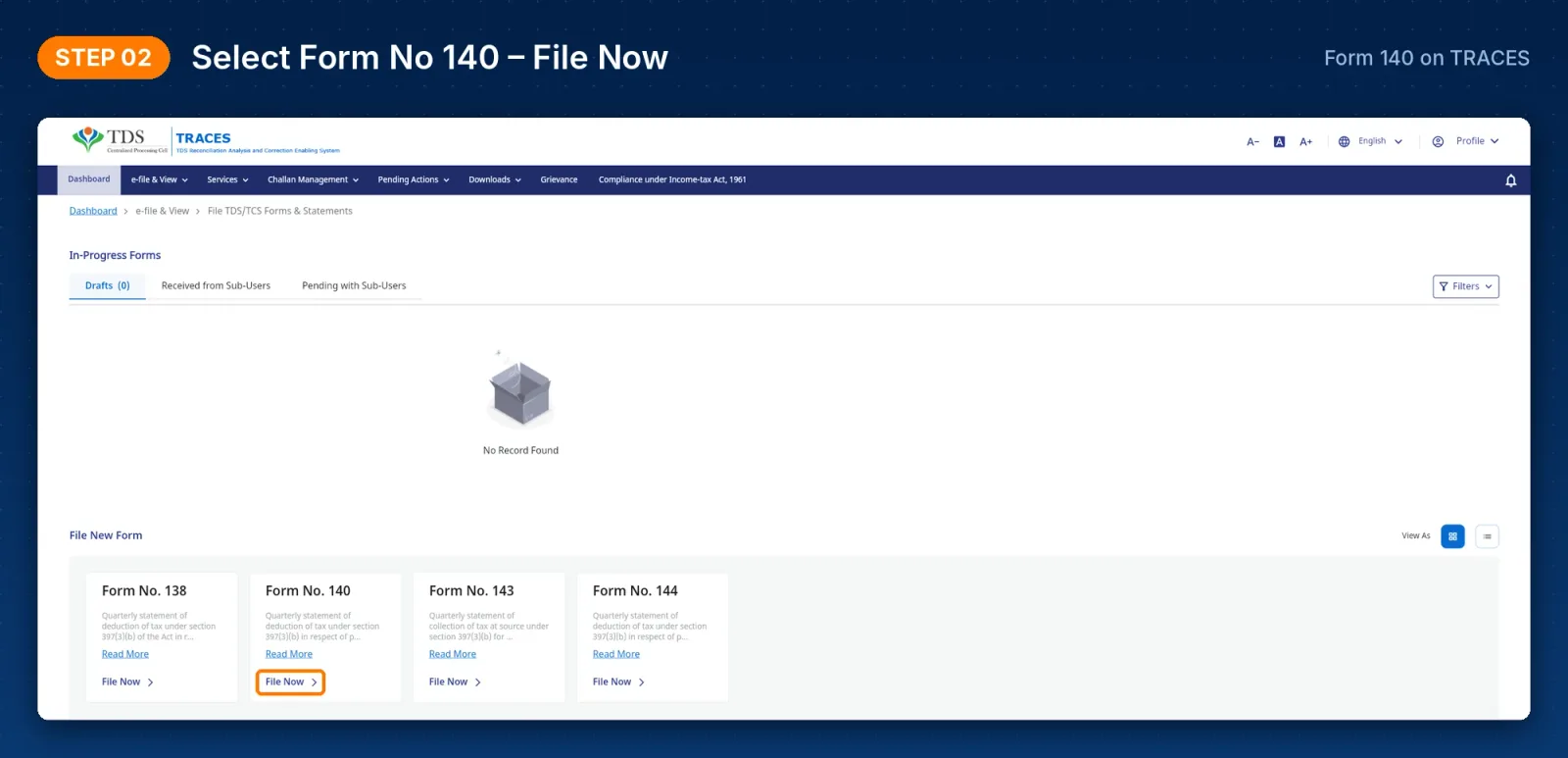
2. Under File New Form, click File Now on Form No. 140.

TRACES Form 140 – File Now option for Form No. 140 under File New Form

Step 2: Select tax year, quarter and filing type
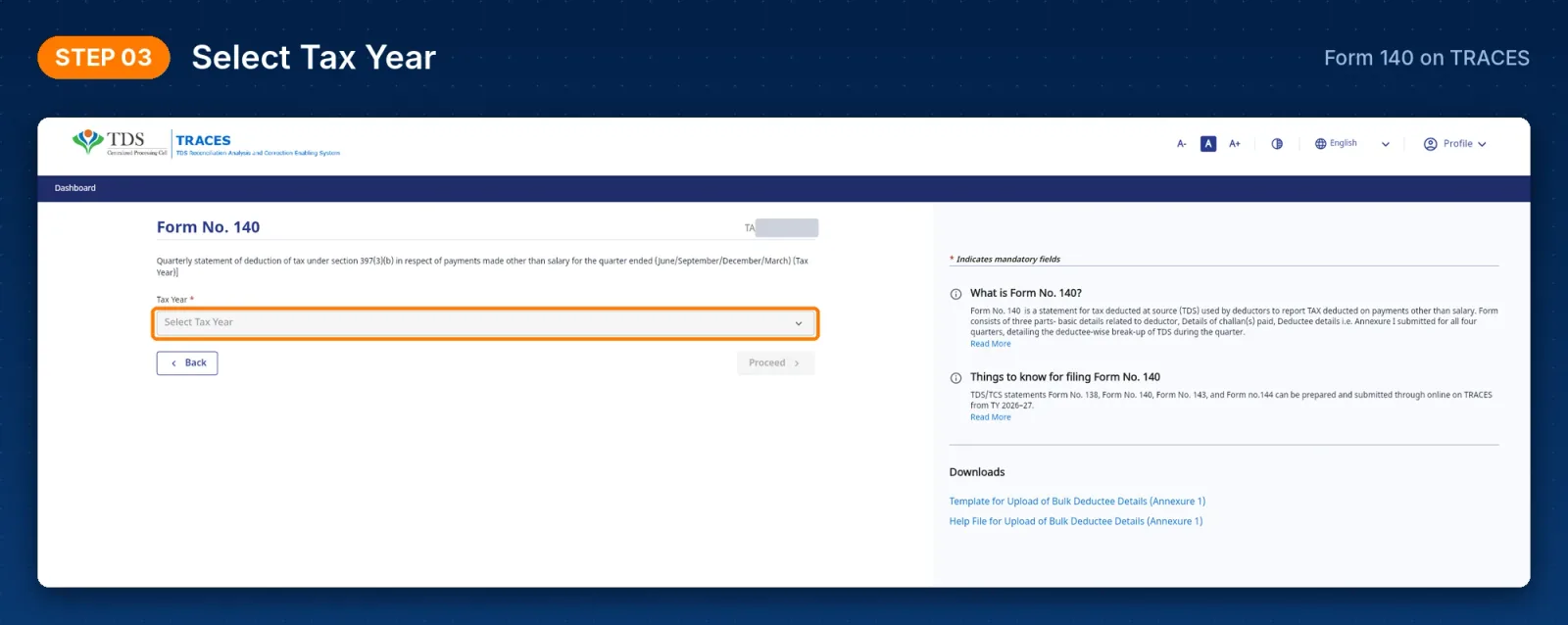
3. Pick the Tax Year (2026-27) from the dropdown.

TRACES Form 140 – selecting tax year 2026-27

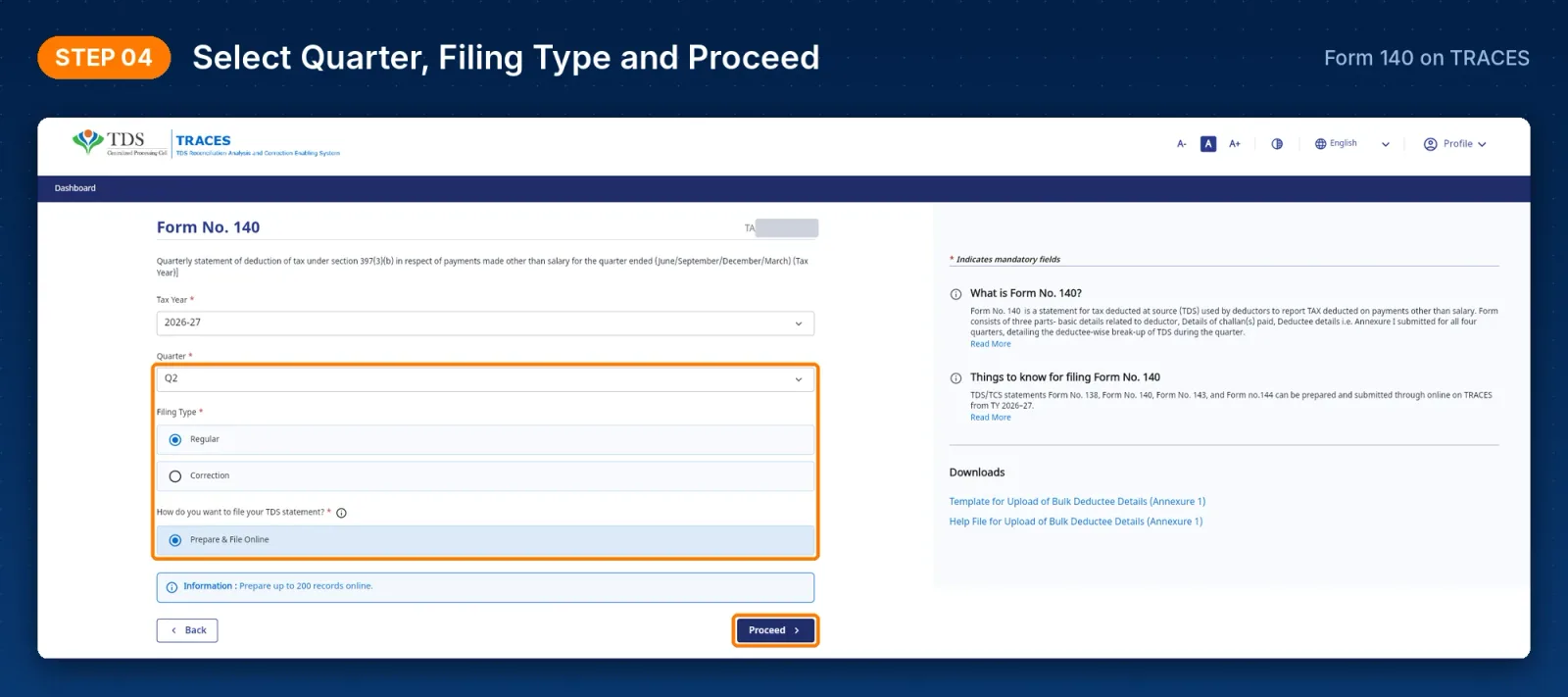
4. Choose Quarter (Q2), Filing Type (Regular) and Prepare & File Online, then click Proceed. You can prepare up to 200 records online.

TRACES Form 140 – selecting quarter Q2, regular filing type and Prepare & File Online

Step 3: Fill in statement, deductor and responsible person details
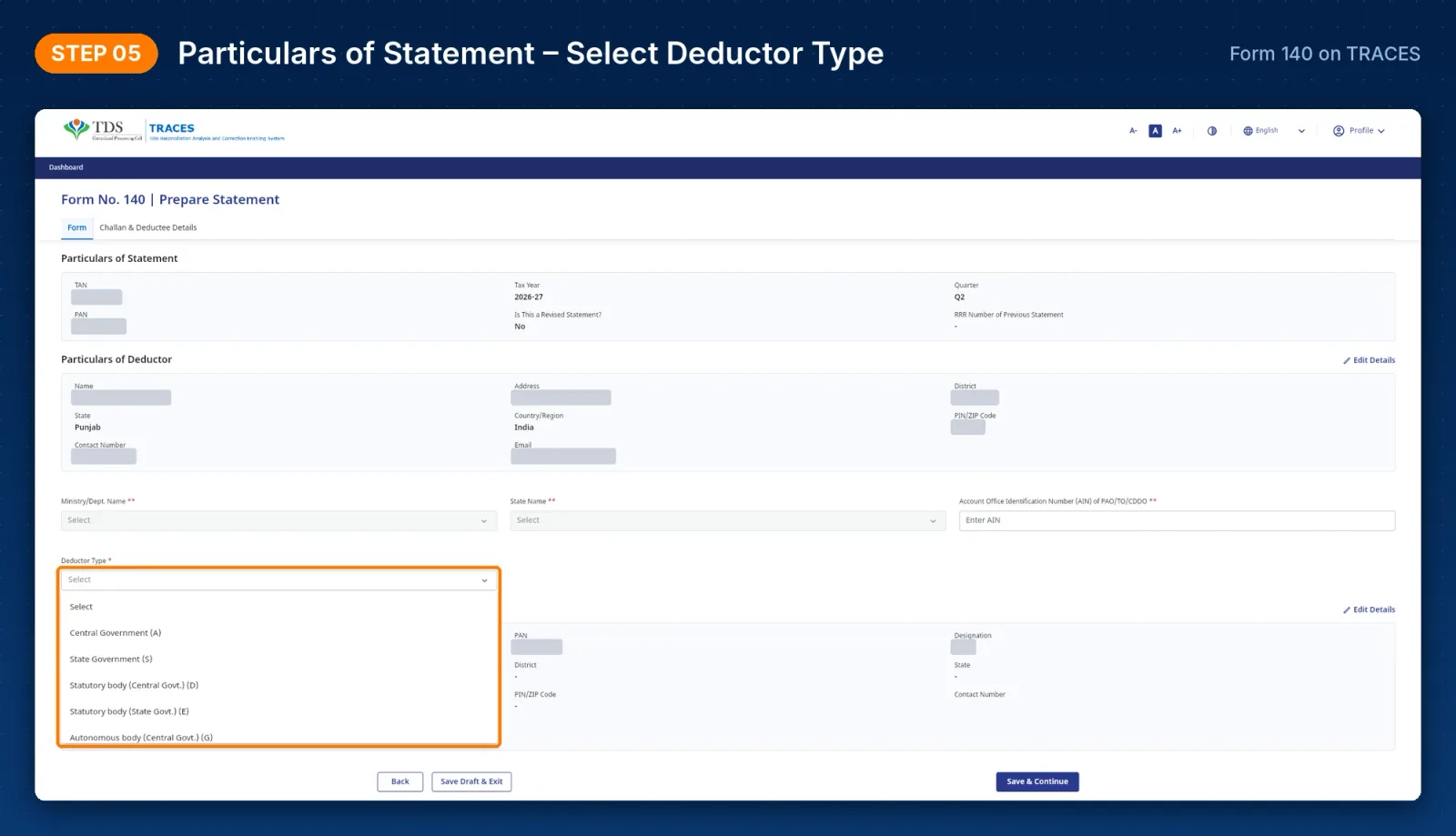
5. Check the auto-filled particulars and choose the Deductor Type.

TRACES Form 140 – particulars of statement and deductor type dropdown

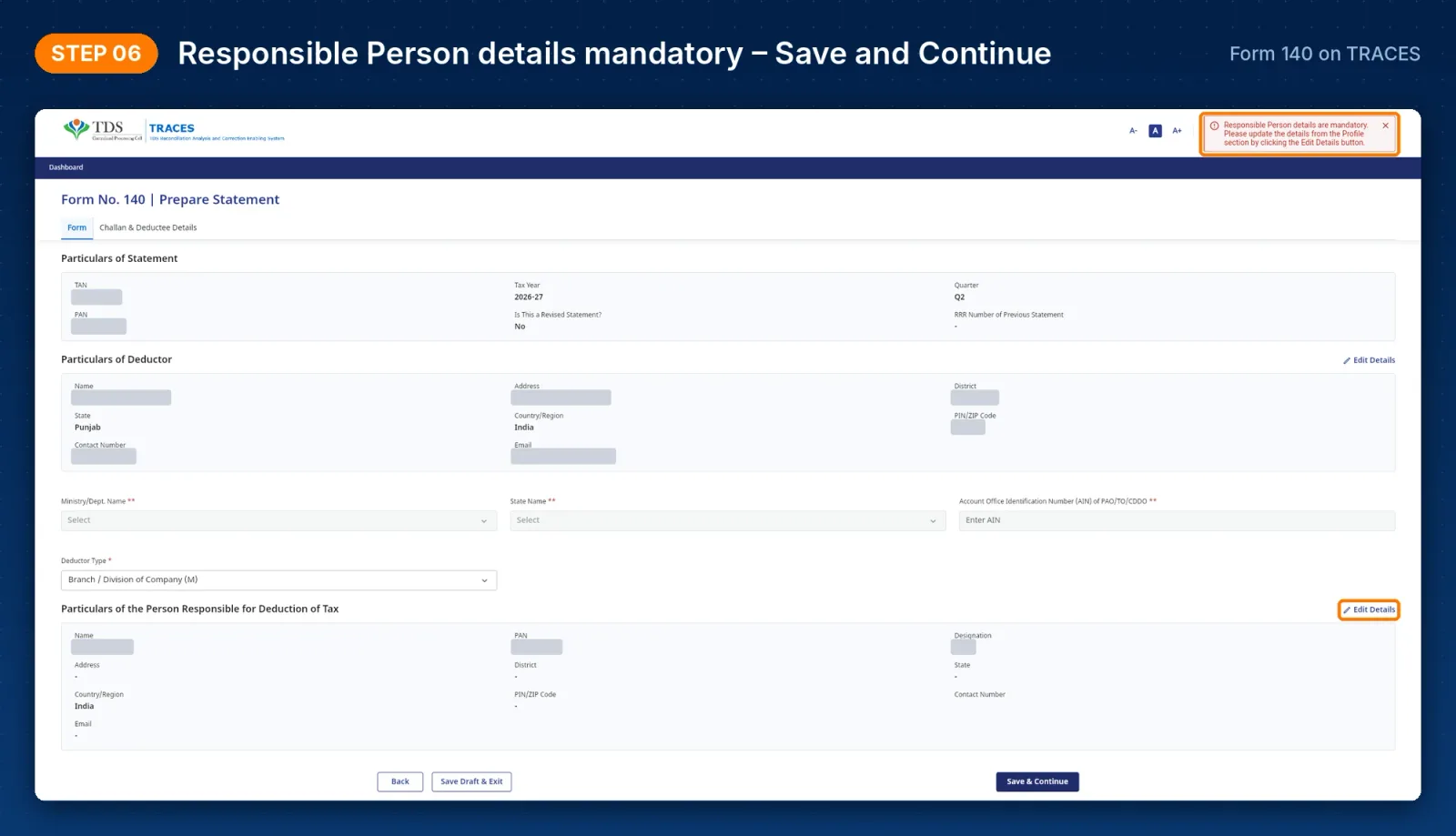
6. If you see the "Responsible Person details are mandatory" error, click Edit Details.

TRACES Form 140 – Responsible Person details mandatory error with Edit Details button

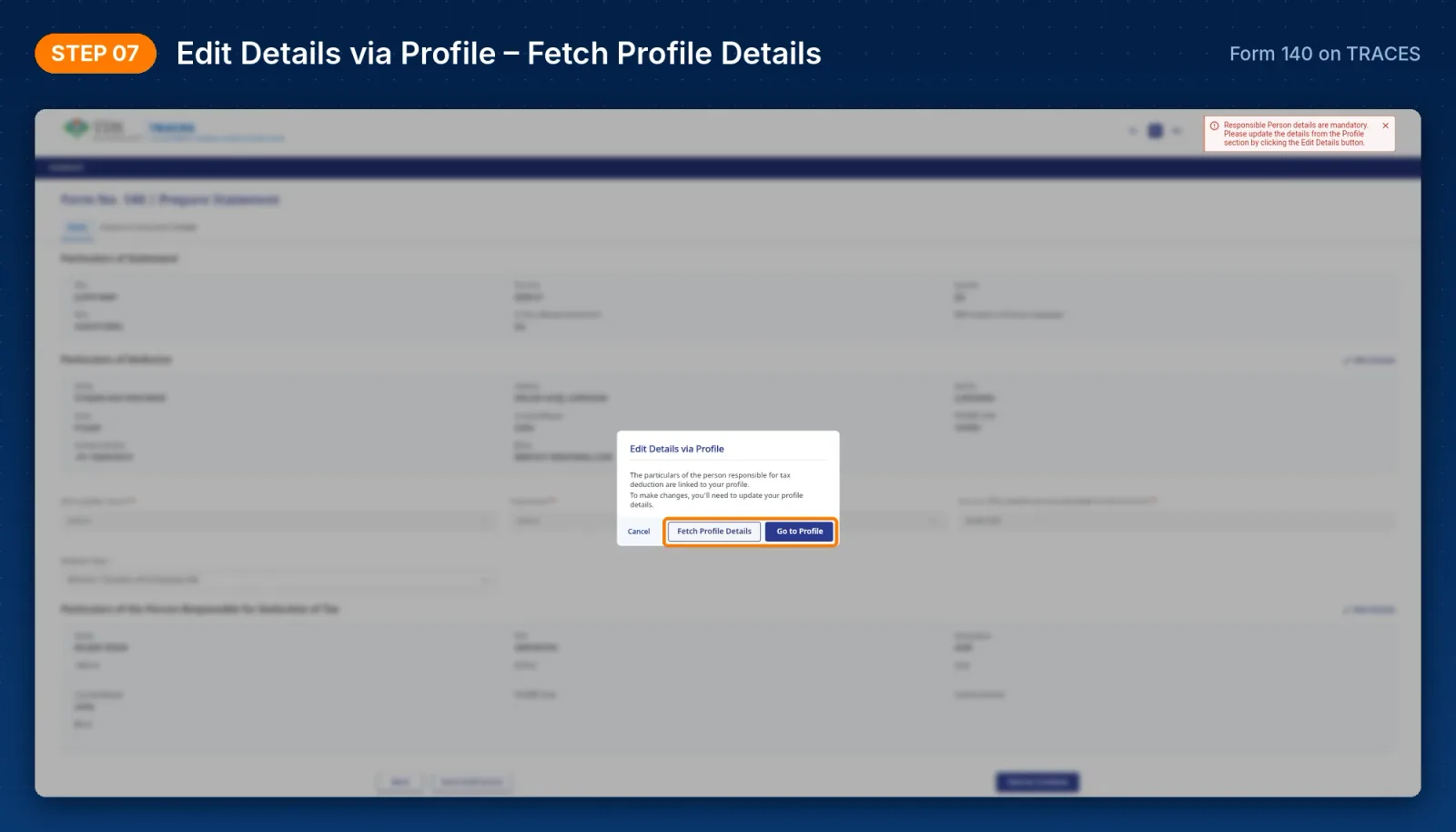
7. Click Fetch Profile Details, or Go to Profile to update them, then Save & Continue.

TRACES Form 140 – Fetch Profile Details and Go to Profile options

Step 4: Add challan details

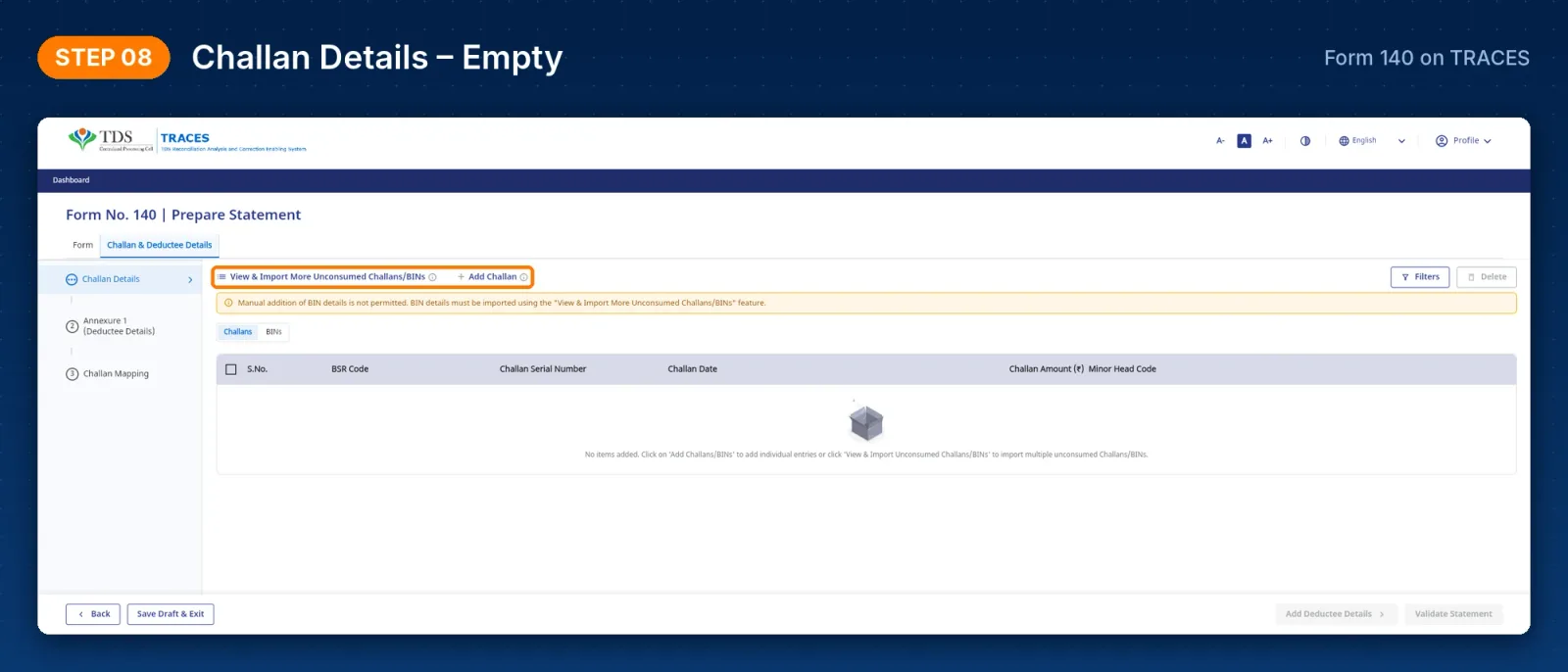
8. On the Challan Details tab, choose View & Import Unconsumed Challans/BINs or Add Challan.

TRACES Form 140 – Challan Details tab with View & Import and Add Challan options

9. To import, select the tax year and click Show. Unconsumed challans with minor head 200/400 are listed here. BINs can only be imported, not added manually.

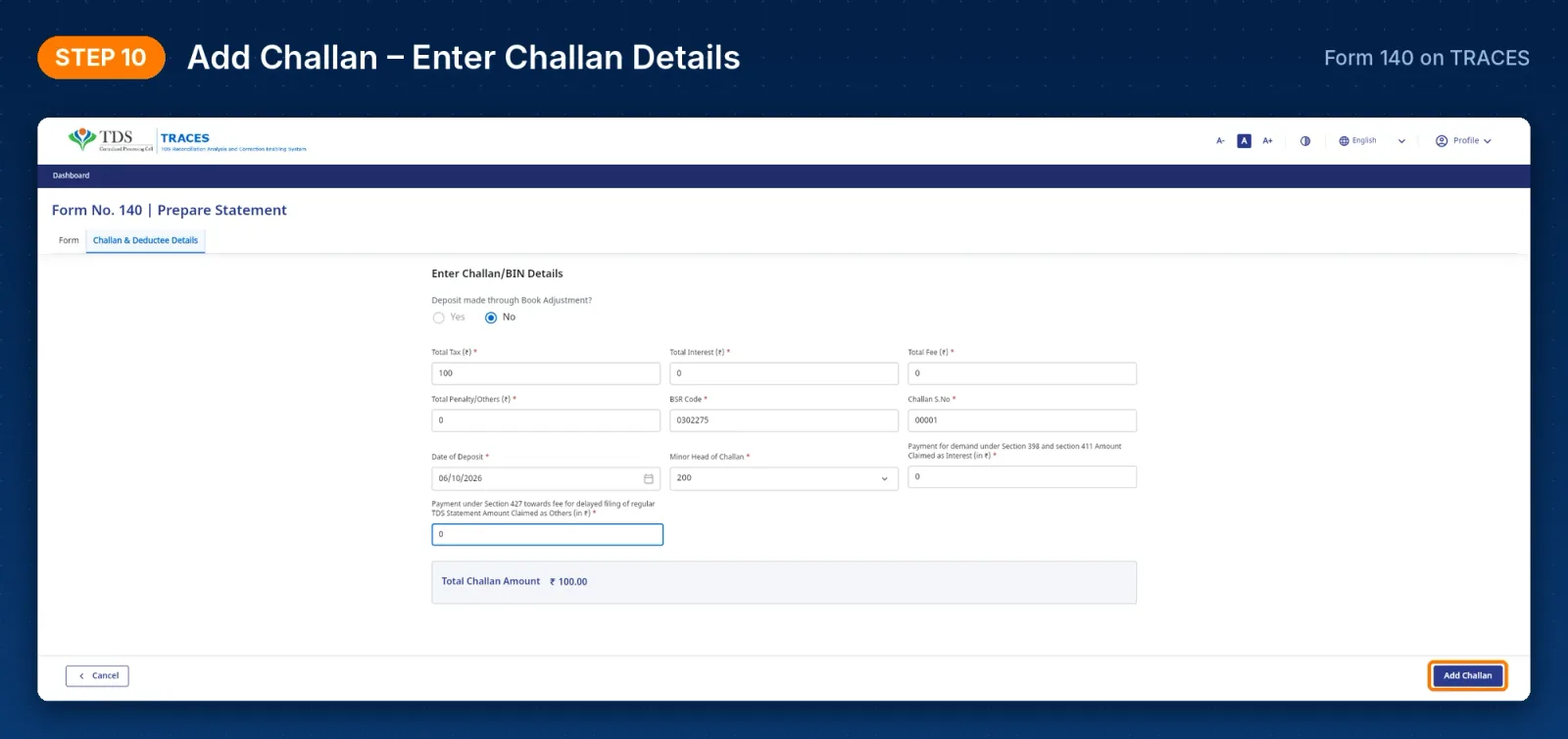
10. To add one manually, enter the tax, interest, fee, BSR code, challan serial number, deposit date and minor head, then click Add Challan.

TRACES Form 140 – Add Challan form with tax, BSR code, challan serial number and deposit date

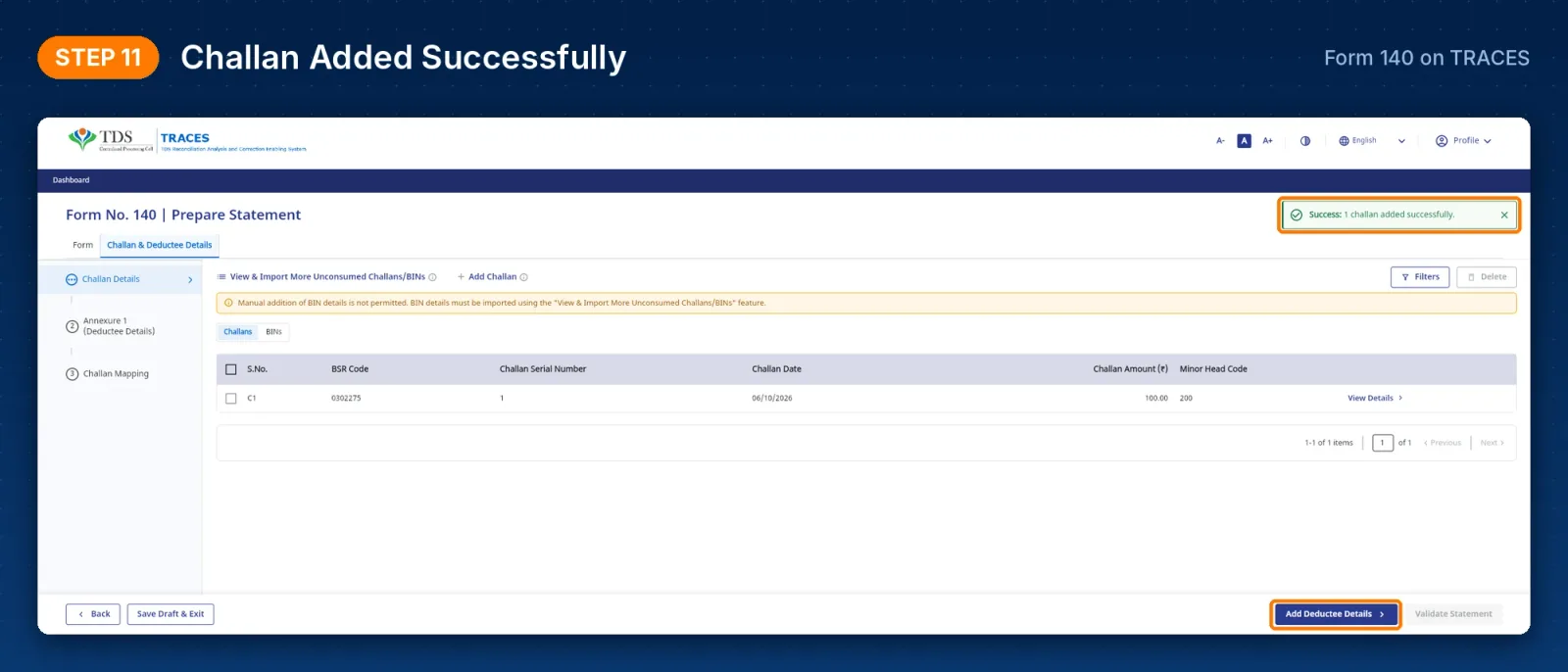
11. You'll see a success message. Click Add Deductee Details.

TRACES Form 140 – challan added successfully message

Step 5: Add deductee details in Annexure 1
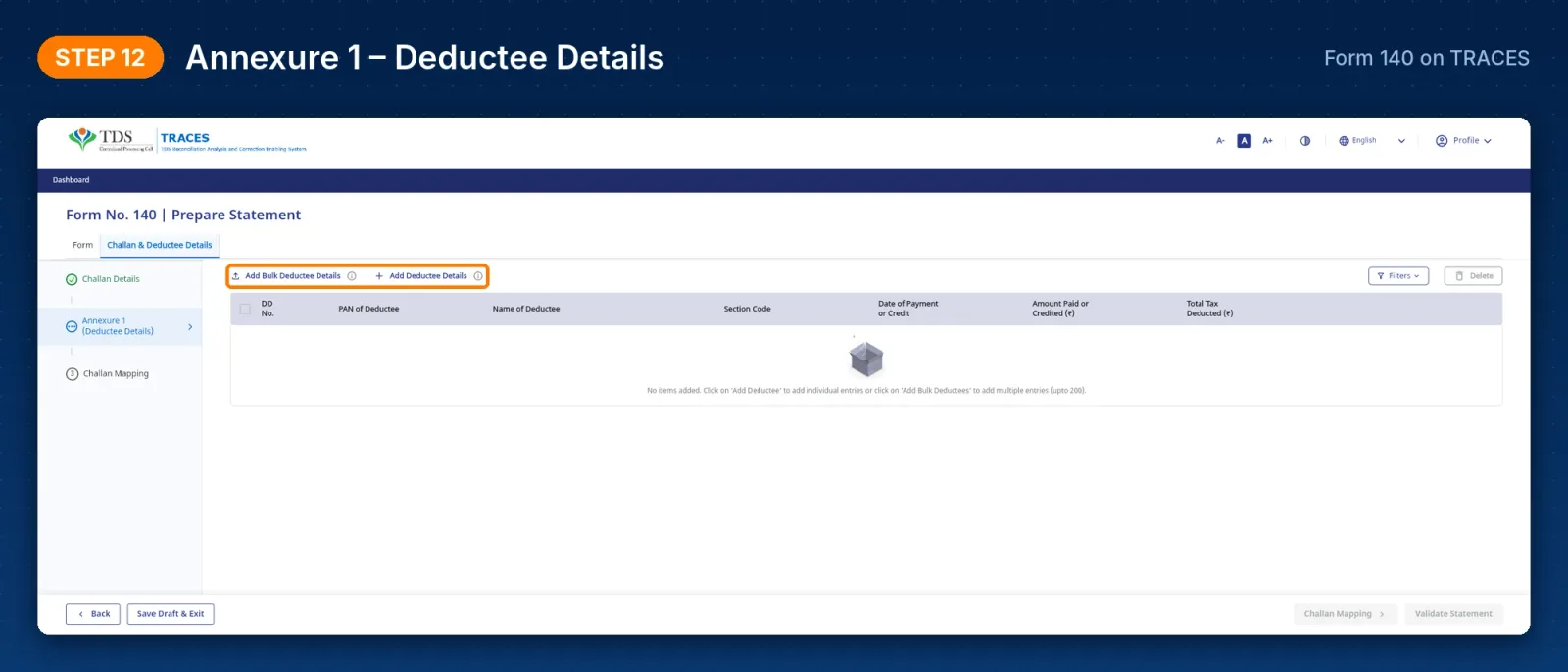
12. Choose Add Bulk Deductee Details or Add Deductee Details.

TRACES Form 140 – Annexure 1 deductee details with bulk and single entry options

13. For bulk upload, download the template and help file, fill them in, and upload the CSV (max 5 MB).

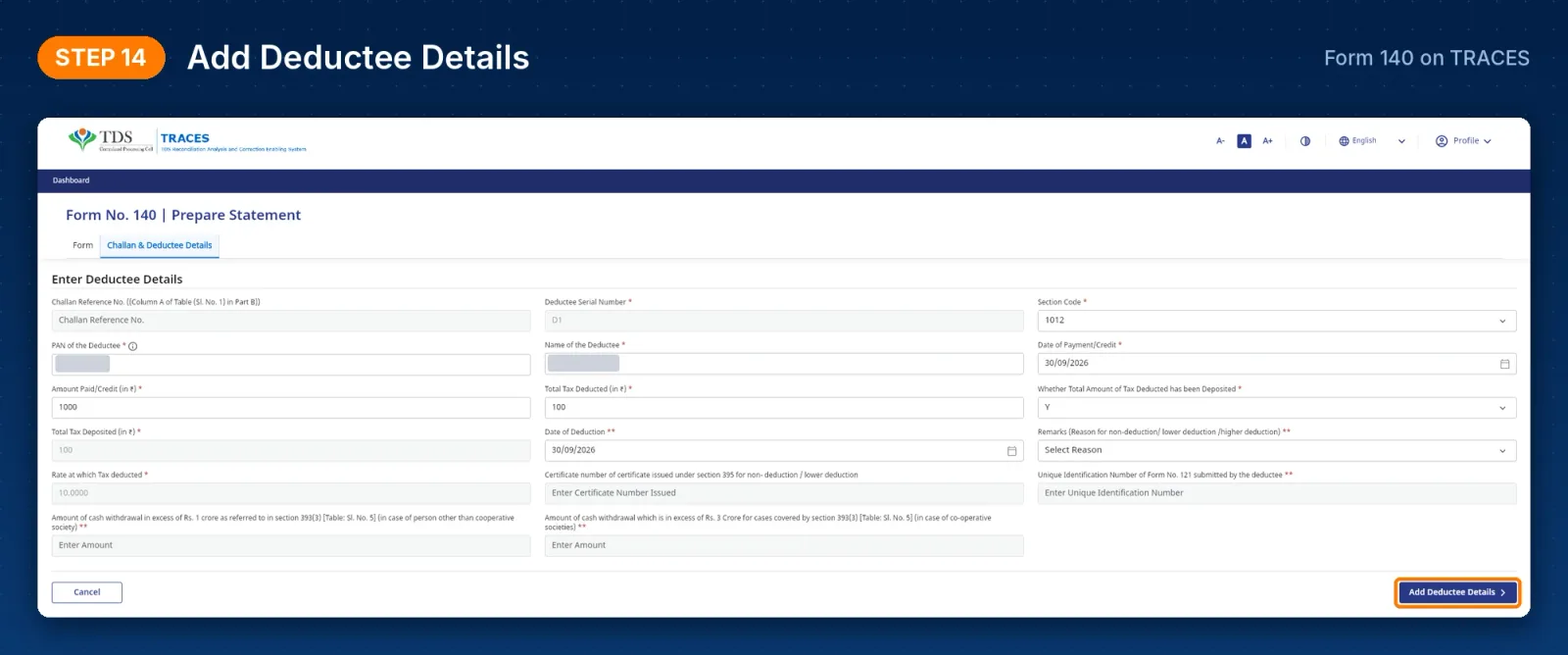
14. For a single entry, enter PAN, name, section code, amount, TDS and dates, then click Add Deductee Details.

TRACES Form 140 – Enter Deductee Details form with PAN, section code and TDS amount

15. The deductee appears in the list. Click Challan Mapping.

Step 6: Map challans to deductees and validate
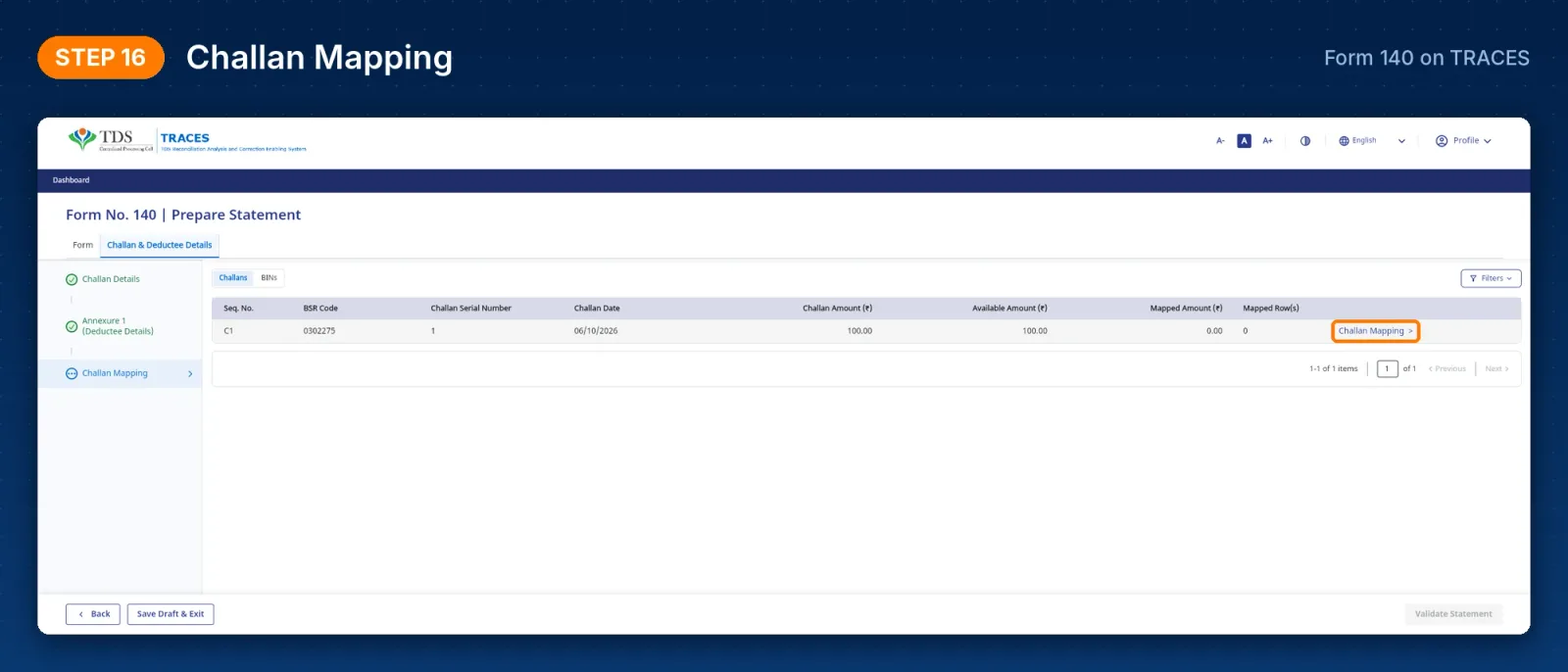
16. Click Challan Mapping against the challan.

TRACES Form 140 – Challan Mapping link against the added challan

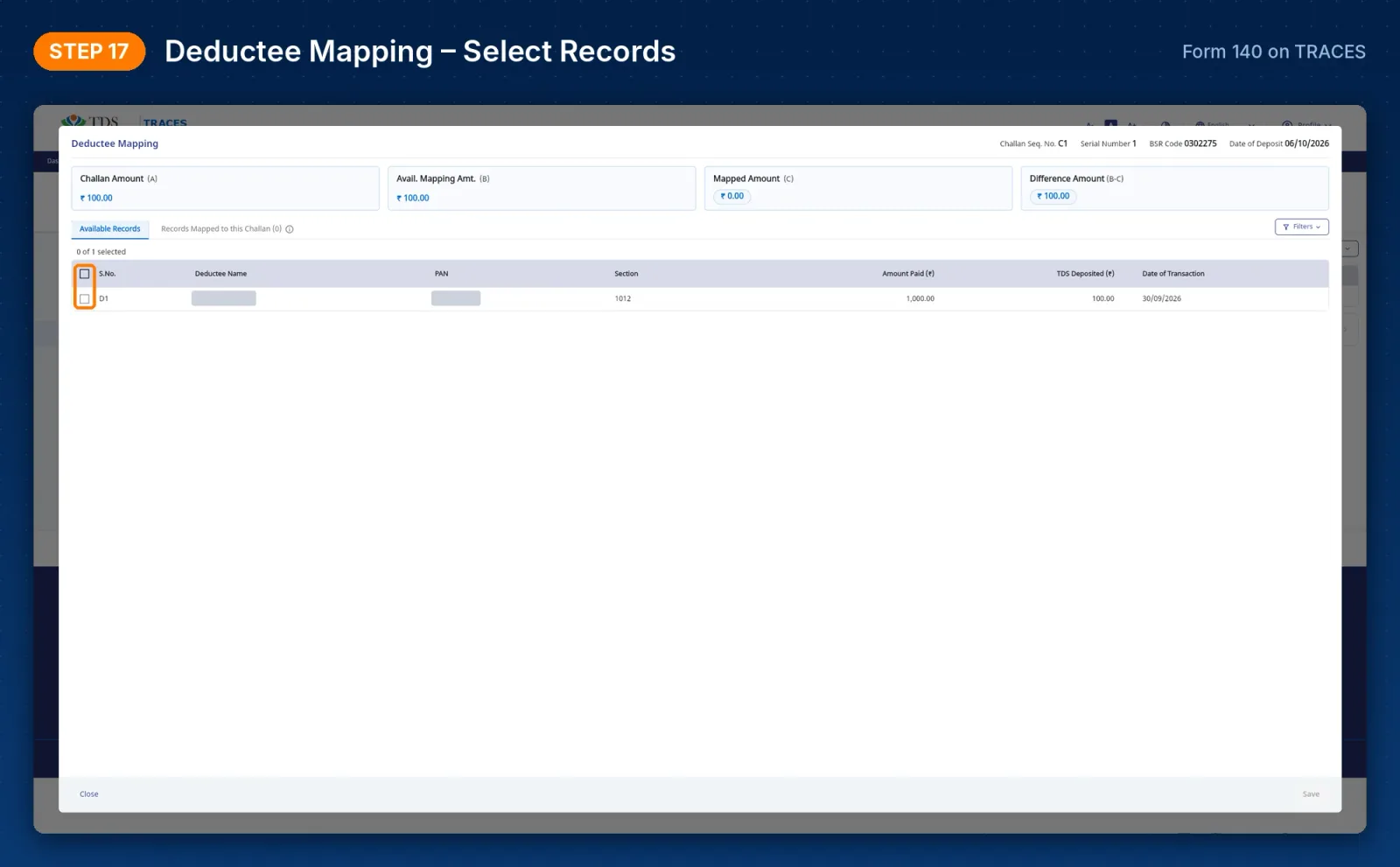
17. Tick the deductee records you want to map.

TRACES Form 140 – Deductee Mapping screen to select deductee records

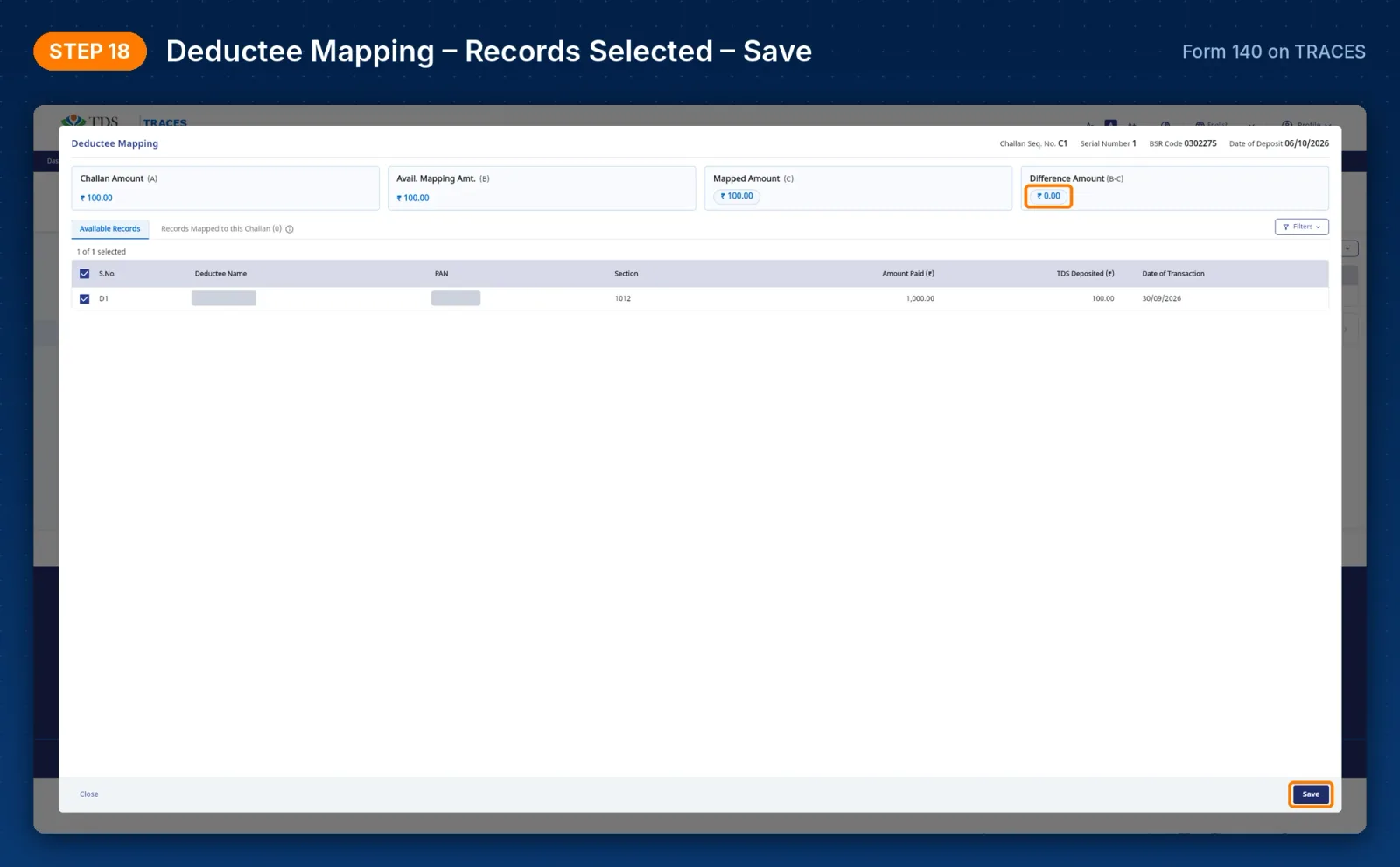
18. Check that the Difference Amount is ₹0.00, then click Save.

TRACES Form 140 – Deductee Mapping with difference amount ₹0.00 and Save button

19. Mapped Amount now equals Challan Amount. Click Validate Statement.

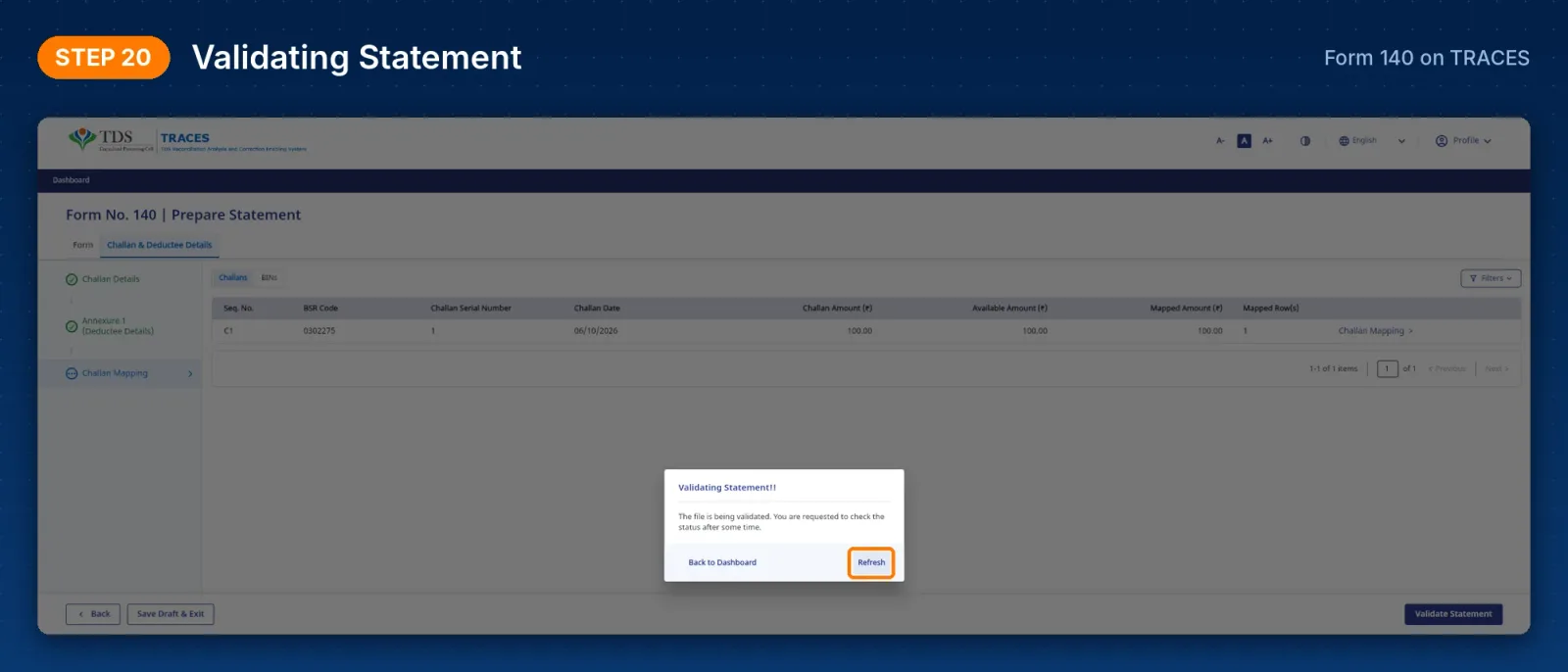
20. Validation runs in the background. Click Refresh later to check the status.

TRACES Form 140 – Validating Statement message with Refresh button

Step 7: Submit and e-verify

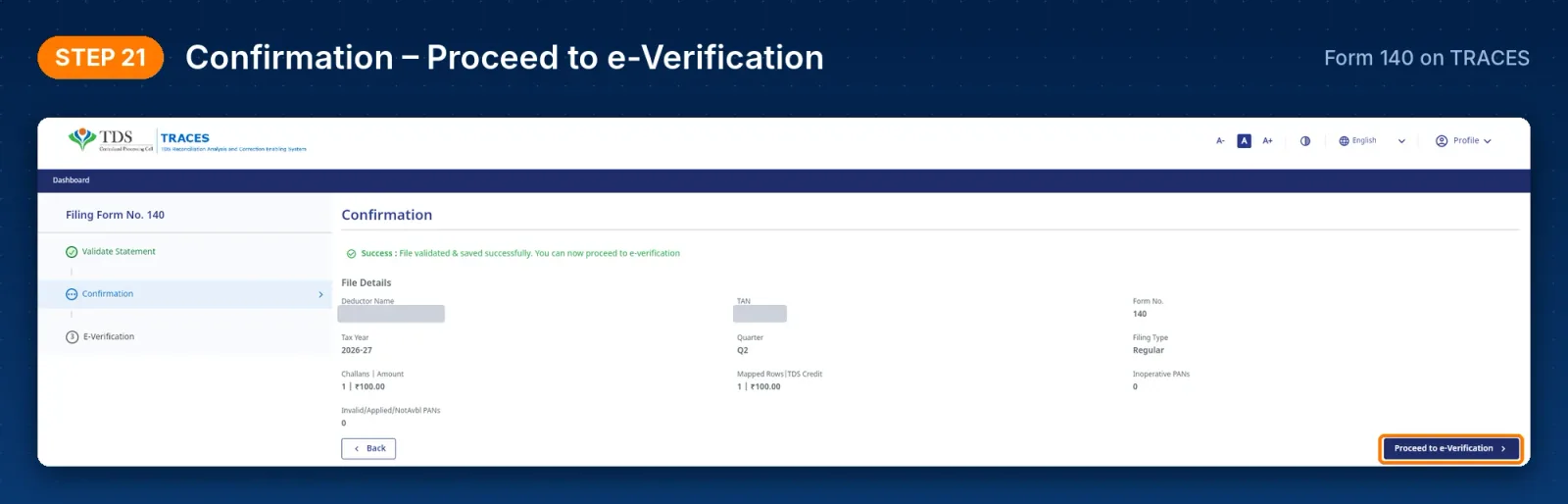
21. Confirm the statement and proceed to e-verification.

TRACES Form 140 – statement confirmation before e-verification

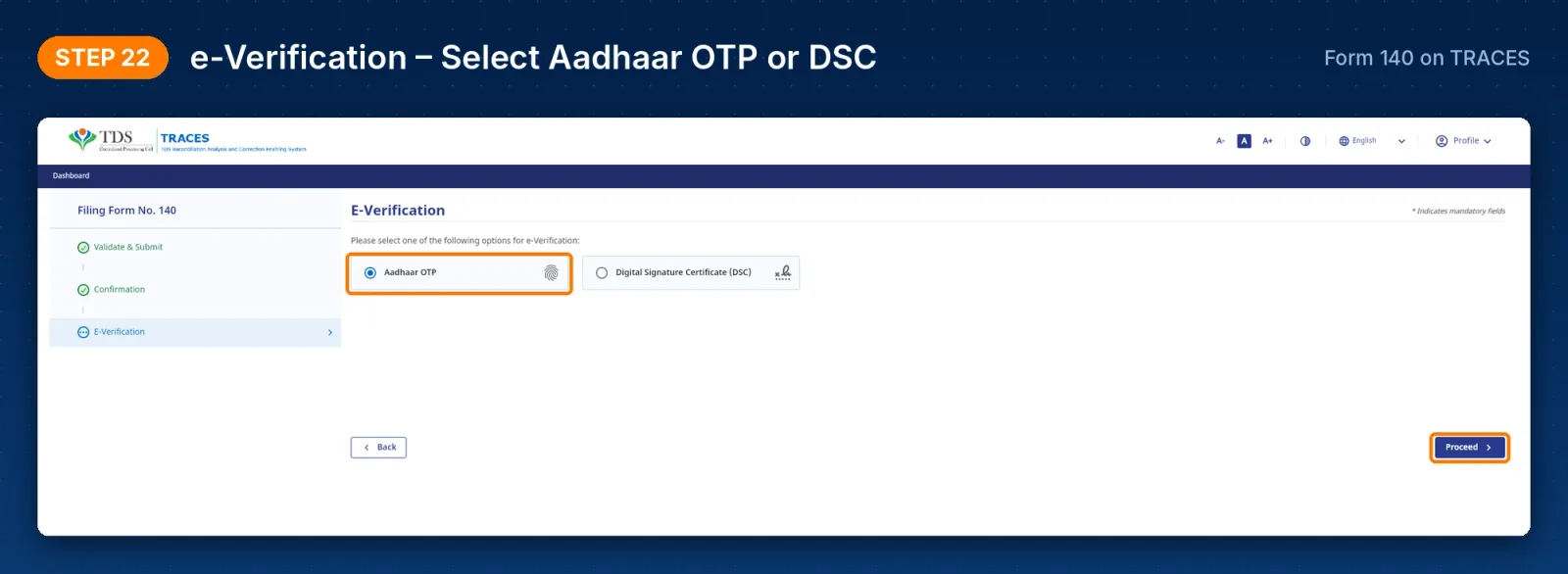
22. Choose Aadhaar OTP or DSC to e-verify.

TRACES Form 140 – e-verification options Aadhaar OTP or DSC

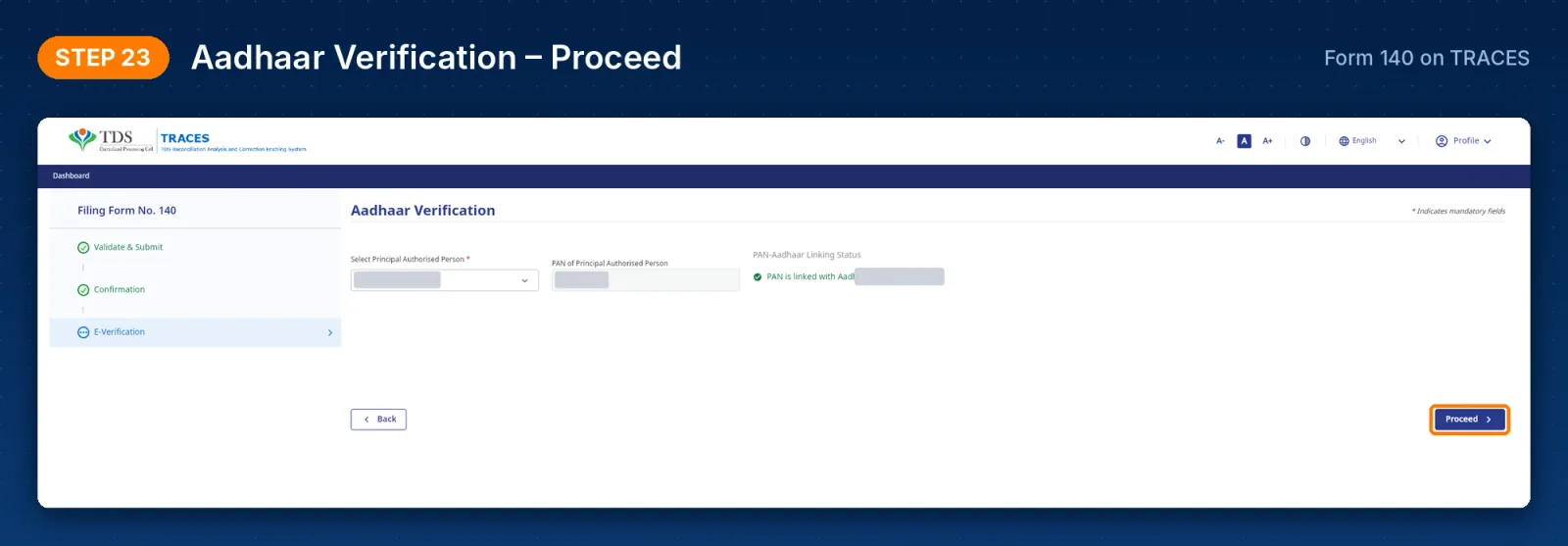
23. If you chose Aadhaar OTP, click Proceed and enter the OTP sent to the mobile number linked with Aadhaar. Once verified, the statement is submitted, and you can track its status under e-file & View → View Filed Forms & Statements.

TRACES Form 140 – Aadhaar OTP verification to submit the statement

What this means for deductors and CA firms

  • Small returns with a few deductees can be filed in minutes without RPU, FVU or the e-filing portal.
  • Challans are imported from TRACES, which reduces typing mistakes in BSR code, date and serial number.
  • Errors such as invalid PANs or unmapped amounts show up before submission instead of after processing.
  • Returns with hundreds of deductee rows will still be easier to prepare in TDS software and upload in bulk.

For CA firms that file returns for many TANs, the online route is useful for quick, low-volume returns. For high-volume deductors, TaxCPC prepares and validates Forms 138, 140, 144 and 143 in bulk, maps old sections to the new section codes, and generates TDS certificates.

Due date for Q2 is 31 October 2026

The quarterly TDS statement for July to September 2026 is due by 31 October 2026. CBDT and CPC-TDS have not yet issued a formal notice on online filing, and the TRACES home page still lists it as coming soon, so check the TRACES e-tutorial before filing. We will update this post when official guidance is released.

Frequently Asked Questions

Yes. From Q2 of Tax Year 2026-27, deductors can prepare, validate and e-verify Forms 138, 140, 143 and 144 directly on TRACES using the Prepare & File Online option.

Share this article

Compliance support

Need Help for Compliance?

Tell us which returns are hurting.

Our team will walk through it with you...