

Who must file GSTR-9 and GSTR-9C
| Aggregate turnover in FY 2025-26 | GSTR-9 | GSTR-9C |
|---|---|---|
| Up to ₹2 crore | Exempt (optional) | Not required |
| Above ₹2 crore up to ₹5 crore | Mandatory | Not required |
| Above ₹5 crore | Mandatory | Mandatory, self-certified |
Key rules before you file
All GSTR-1 and GSTR-3B returns for the year must be filed first. The portal will not let you file GSTR-9 for FY 2025-26 until every applicable monthly or quarterly return for that year is filed. GSTR-9 cannot be revised. Errors found later can only be dealt with in later returns where the law allows, or explained in proceedings. Reconcile first. Late filing attracts a daily late fee, with a cap linked to turnover, from 1 January 2027 until the return is filed. Use the GST late fee calculator to work out the amount. The ITC cut-off is the earlier of 30 November 2026 and the date you file GSTR-9. This is the trap explained below.
The ITC trap: don't file GSTR-9 too early
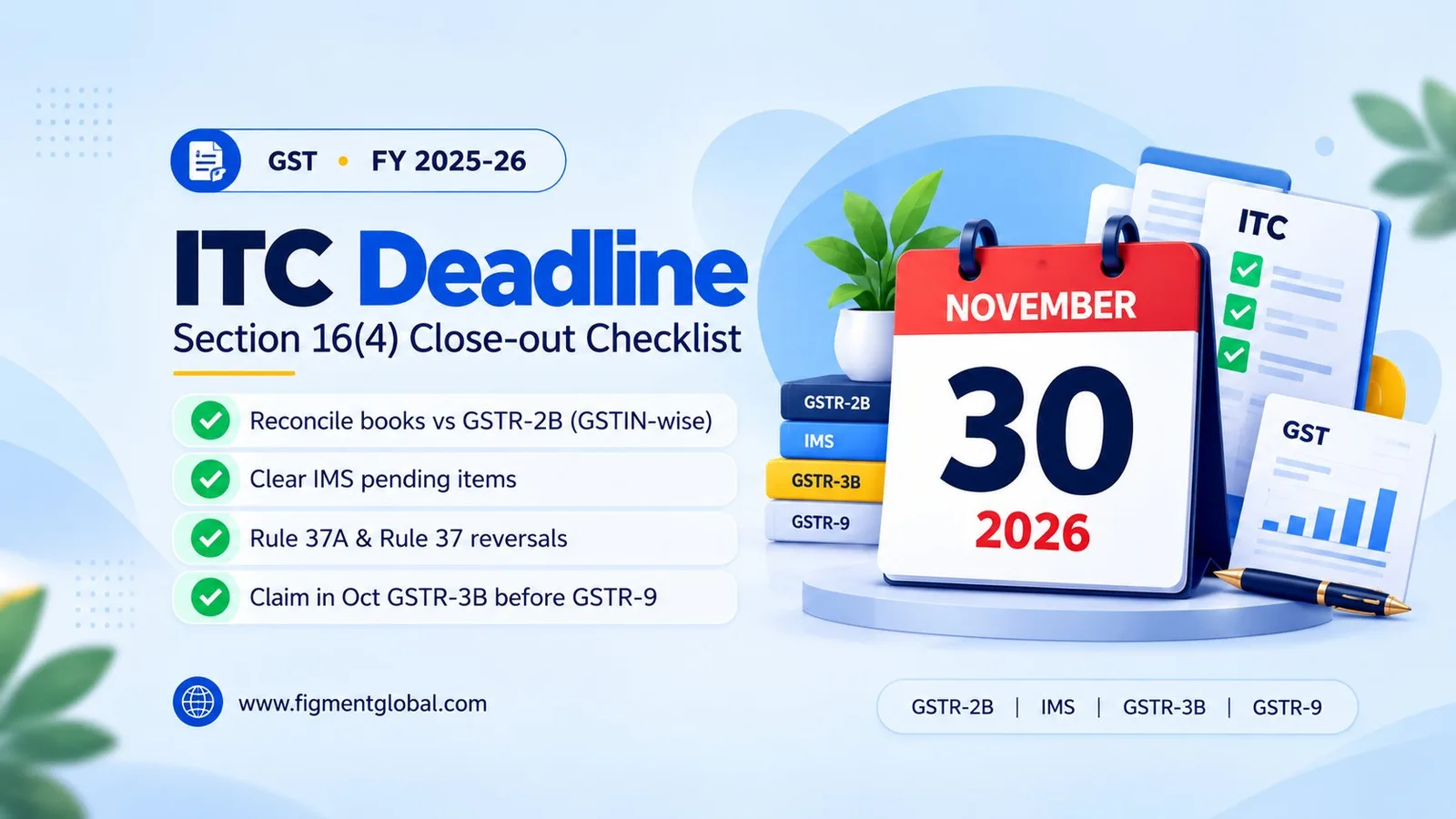
Finish all FY 2025-26 ITC claims in GSTR-3B (the October 2026 return for monthly filers, filed by 30 November). Then prepare and file GSTR-9 and GSTR-9C before 31 December 2026.
What GSTR-9 brings together
Outward supplies reported in GSTR-1 and the tax paid on them through GSTR-3B. Input tax credit availed during the year, reversals, and a comparison with the ITC shown in the auto-generated statements. Tax paid in cash and through credit. Transactions of FY 2025-26 reported in the next year's returns (amendments, credit notes and ITC claimed up to the cut-off), shown separately so the year's position is complete. HSN-wise summaries of outward and inward supplies.
Pre-filing checklist (run for each GSTIN)
| # | Check | Why it matters |
|---|---|---|
| 1 | All GSTR-1 and GSTR-3B for April 2025 – March 2026 filed | GSTR-9 cannot be filed otherwise |
| 2 | Turnover in books = GSTR-1 = GSTR-3B (after amendments) | Differences need an explanation or a payment |
| 3 | Tax liability in GSTR-1 vs tax paid in GSTR-3B | Short payment must be paid with interest before filing |
| 4 | ITC claimed in GSTR-3B vs GSTR-2B for the year | Excess claims will be questioned |
| 5 | Ineligible and blocked ITC (section 17(5)) reversed | Reported reversals should match the books |
| 6 | Rule 37 / 37A reversals and reclaims recorded | These show up as ITC movements in the year |
| 7 | FY 2025-26 credit notes, amendments and ITC claimed in April–November 2026 identified | They belong in the separate part of GSTR-9 |
| 8 | HSN summary reconciled, including the rate change from 22 September 2025 | Mismatched HSN data is a common query |
| 9 | Turnover above ₹5 crore: GSTR-9C reconciliation with audited financial statements | 9C reconciles the books with the annual return |
| 10 | All FY 2025-26 ITC claimed in GSTR-3B before GSTR-9 is filed | Filing GSTR-9 closes the ITC window |
GSTR-9C: reconciling books with the return
turnover as per books vs turnover declared in GSTR-9, with reasons for each difference; taxable turnover and tax payable, rate by rate; ITC as per books vs ITC claimed.
Common mistakes
Filing GSTR-9 before 30 November and losing FY 2025-26 ITC still to be claimed. Copying auto-populated figures without checking them against the books. Ignoring credit notes and amendments made after March 2026 that relate to FY 2025-26. Treating the rate change of 22 September 2025 as a single-rate year in the HSN summary. Leaving 9C until the last week, when audited state-wise figures are not ready.
How GSTCPC handles the annual return
GSTR-1, GSTR-1A, GSTR-3B, GSTR-9 and GSTR-9C filing, with role-based filing controls. GSTR-2A and GSTR-2B reconciliation against the purchase register, with ITC tracking and ITC mismatch reports. A temporary ITC reversal and reclaim ledger. Multiple GSTINs under one organisation, with centralised reports and period-wise comparisons.
Key takeaways
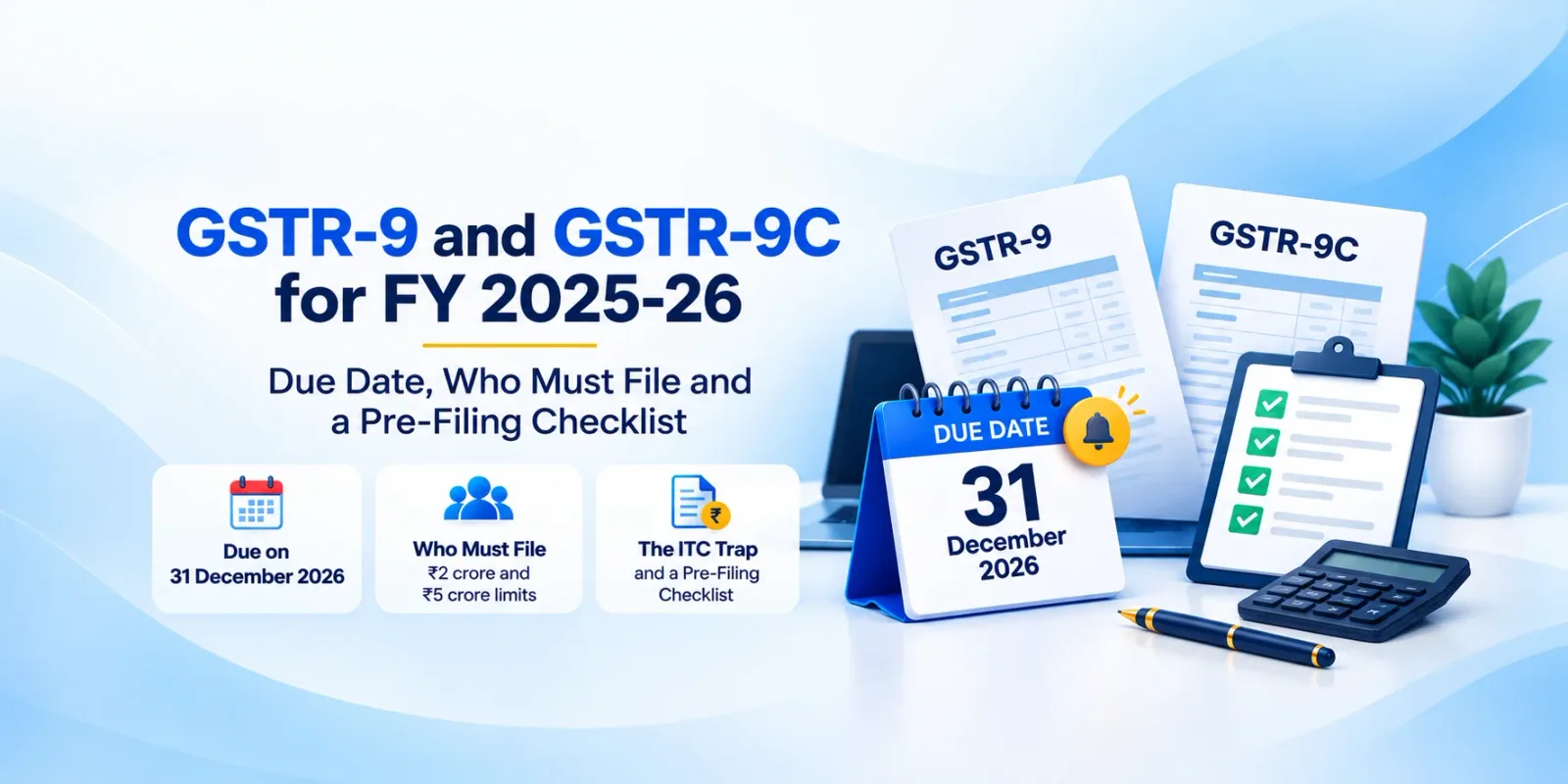
GSTR-9 and GSTR-9C for FY 2025-26 are due on 31 December 2026. GSTR-9 is optional up to ₹2 crore turnover; GSTR-9C is required above ₹5 crore and is self-certified. File all GSTR-1 and GSTR-3B first, and claim all FY 2025-26 ITC before filing GSTR-9. GSTR-9 cannot be revised, so reconcile at GSTIN level before you file.
Frequently Asked Questions
31 December 2026, for both GSTR-9 and GSTR-9C. No extension had been announced as of 24 October 2026.
No. Taxpayers with aggregate turnover up to ₹2 crore are exempt from filing GSTR-9 from FY 2024-25 onwards (Notification No. 15/2025-Central Tax).
Taxpayers with aggregate turnover above ₹5 crore. It is a self-certified reconciliation statement filed along with GSTR-9.
No. Once filed, GSTR-9 cannot be revised, which is why reconciliation before filing matters.
Yes. ITC on FY 2025-26 invoices can be claimed only until 30 November 2026 or the GSTR-9 filing date, whichever is earlier. Claim all credit in GSTR-3B first.